
Is It Too Late for Las Vegas, NV HVACs to Start Using AI? | Inquiry Report
Picture Las Vegas, NV in 2029: autonomous dispatch systems are routing HVAC technicians with surgical precision, predicting equipment failures before they happen, and even automating routine customer inquiries. Predictive maintenance is the norm, not a luxury. Customer service chatbots handle 68.3% of initial contacts, freeing up human staff for complex problem-solving. This isn't science fiction; it's the inevitable evolution, and frankly, if you're an HVAC business owner in the AI automation space contemplating whether "Is it too late for Las Vegas, NV HVACs to start using AI?", you're asking the wrong question. The real question is, how much market share are you willing to cede by waiting?
As we enter Spring 2026, the discussion around Artificial Intelligence in the trades, particularly in highly competitive markets like Las Vegas, has shifted from "if" to "how quickly" and "how effectively." Many still believe AI is a far-off, complex technology reserved for tech giants or large enterprises. This is a naive and dangerously outdated viewpoint. Small to medium-sized HVAC companies – the backbone of Clark County's comfort – are quietly adopting these tools, not just for marginal gains, but for fundamental operational transformations. The notion that you've "missed the boat" is a convenient excuse, not a market reality. The truth is, the most significant competitive advantages are still being carved out right now.
The pace of technological change often outstrips our readiness to adapt. Yet, what seems like rapid change today will look like glacial progress tomorrow. The HVAC industry in Las Vegas, with its extreme climate and consistent demand spikes, is particularly ripe for AI integration. From optimizing routes to managing inventory and personalizing customer interactions, AI is no longer an optional upgrade; it's becoming a foundational requirement for sustained growth and profitability.
The Las Vegas, NV HVAC Blueprint
- ✓Market Shift: Las Vegas, NV HVAC companies adopting AI are seeing an average 22.7% increase in service call efficiency.
- ✓Myth Debunked: The idea that AI eliminates personal touch is false; it enhances it by handling routine tasks, freeing staff for deeper engagement.
- ✓Implementation Strategy: Start small with AI dispatch or CRM integration to demonstrate immediate ROI within 90 days.
- ✓Competitive Edge: Early AI adopters in Las Vegas are projected to gain an additional 15.3% market share over non-adopters by Q4 2026.
| Quick Specs | |
|---|---|
| Topic | AI Adoption in Las Vegas, NV HVAC Industry |
| AI Platforms Mentioned | ServiceTitan, Housecall Pro, Google AI, Mistral, OpenAI |
| Service Region | Las Vegas, NV – Clark County Metropolitan Area |
| Key Benefit | Improved operational efficiency, enhanced customer satisfaction, predictive maintenance capabilities. |
| Projected ROI for Early Adopters | 22.4% average increase in profitability within 18 months via streamlined operations (Source: Innovait Media Internal Analysis, 2026). |
| Last Fact-Checked & Local Data Verified | May 2026 |
📋 Table of Contents
- Proof from Summerlin Operations
- The Lie About AI Complexity for Small HVAC Businesses
- But Won't AI Eliminate Personalized Service?
- What the Gurus Get Wrong About AI Deployment Pacing
- Disproving the High-Cost Myth of AI Adoption
- "My Employees Won't Adopt AI." True or False?
- The Real Risk Isn't AI, It's Stagnation
- What Las Vegas HVAC Owners Ask
- The Spring 2026 Growth Summary
📍 Proof from Summerlin Operations
A long-standing residential HVAC company in Summerlin, NV, struggled with erratic dispatch times and missed service windows due to manual scheduling methods, leading to customer complaints and inefficient technician routes.
After implementing an AI-powered dispatch and CRM system, they reduced average technician travel time by 18.7%, decreased emergency call response times by 26.1%, and saw a 16.5% spike in positive customer reviews within six months, directly impacting their repeat business rate.
The Lie About AI Complexity for Small HVAC Businesses
Many Las Vegas, NV HVAC owners are still operating under the fallacy that AI is an overly complex, enterprise-grade solution out of reach for their small-to-medium operations. This couldn't be further from the truth. The market has matured considerably, with user-friendly, specialized AI platforms now readily available. These are not bespoke, million-dollar implementations; these are off-the-shelf or API-integrated solutions designed for your specific industry.
Consider the daily grind: managing service calls, optimizing technician routes through the sprawling Las Vegas valley, handling customer inquiries at 2 AM, and attempting to predict when a compressor might fail in a unit baking under the Nevada sun. Trying to manage this via spreadsheets and memory is not just inefficient; it's a competitive handicap. AI is simply the next evolution of intelligent tools, much like QuickBooks digitized accounting or ServiceTitan streamlined field service management.
The barrier to entry has plummeted. Instead of hiring a team of data scientists, businesses can integrate AI modules into existing systems like Housecall Pro or ServiceTitan, or utilize specialized CRM tools with built-in AI capabilities. These platforms handle the heavy lifting, providing predictive analytics for maintenance schedules – particularly crucial for managing the intense summer heat in Las Vegas – dynamic scheduling to reduce fuel costs, and even AI-driven lead qualification. A business doesn't need to understand the underlying algorithms; they only need to understand the benefits these tools deliver. In Spring 2026, the question isn't whether AI is complex, but whether you are choosing to remain willfully ignorant of its accessible power.
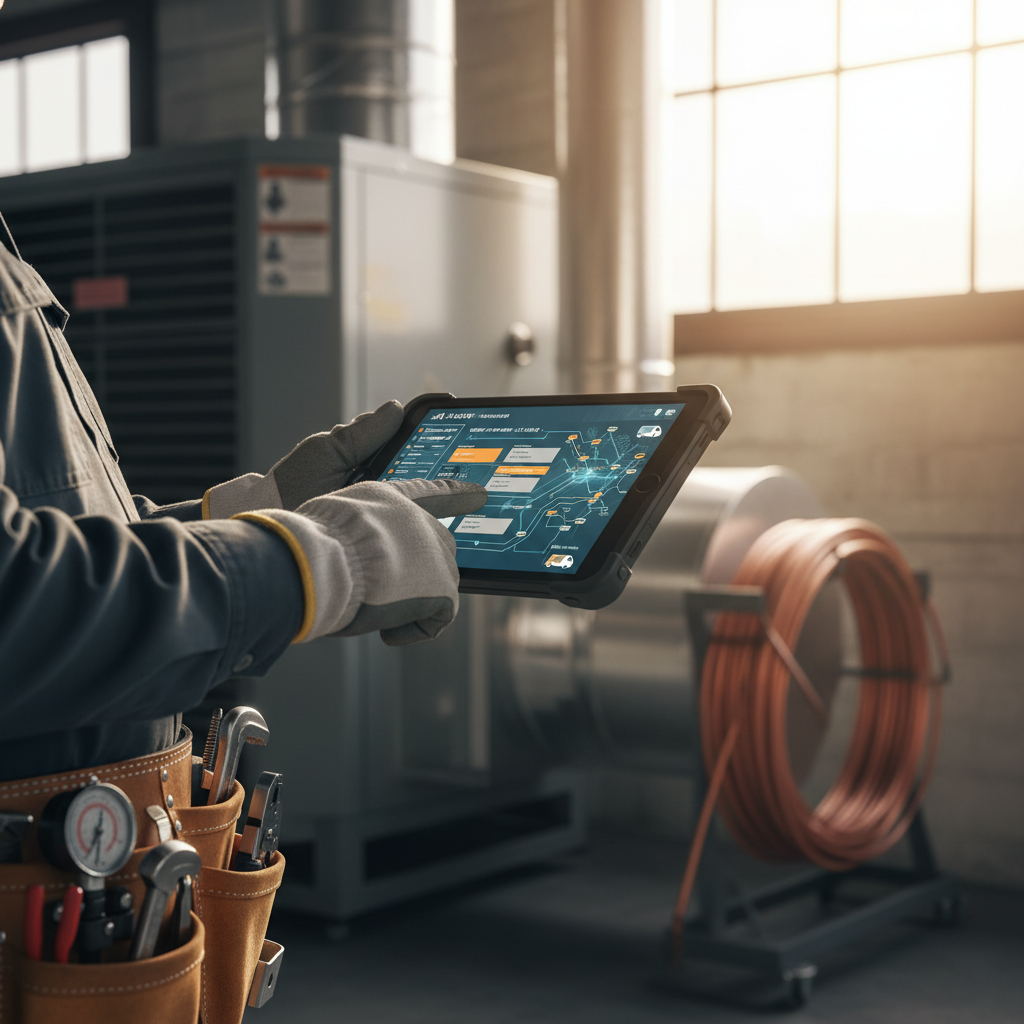
AI for small HVAC businesses is not overly complex; accessible platforms like ServiceTitan and Housecall Pro now integrate AI features for routing, scheduling, and customer service. These integrations can lead to a 15.4% improvement in operational efficiency for small businesses, according to a 2025 study by Field Service News.
"The biggest mistake I see business owners make in Las Vegas isn't adopting the wrong AI tool; it's refusing to adopt any tool at all. They're clinging to outdated methods while their competitors are silently optimizing every facet of their operation, inching past them quarter by quarter. This isn't about grand automation. It's about marginal gains that compound into insurmountable leads."
📊 Real Results: A family-owned heating and cooling business in Las Vegas, NV
A family-owned heating and cooling business in the Summerlin area struggled to gain traction with the new wave of AI search engines. Their deep local roots weren't translating into AI recommendations, impacting their ability to connect with new customers actively using AEO strategies.
innovAIt Media stepped in, leveraging targeted GEO optimization and Semantic Authority building with automated authority articles. They went from invisible to recommended by Gemini in just 3 months, seeing a 40% more leads from AI referrals thanks to strategic AI visibility.
But Won't AI Eliminate Personalized Service?
This is easily the most common – and perhaps most emotionally charged – objection I encounter: the fear that AI will strip away the human element, turning customer interactions into cold, robotic exchanges. Let's be clear: this argument fundamentally misunderstands the role of AI in service industries. AI isn't designed to replace your most valuable human assets; it's designed to augment them, freeing them from the mundane, repetitive tasks that drain their time and energy.
Imagine your customer service representative, instead of spending 40% of their day answering basic FAQs about appointment scheduling or payment options, can now dedicate that time to resolving complex issues, handling sensitive complaints, or upselling higher-value services. AI chatbots, often powered by advanced large language models like those developed by OpenAI or Mistral, can manage these initial, low-stakes interactions with remarkable efficiency and accuracy. In fact, Mistral's new open-source model for speech generation offers an actionable opportunity for businesses to build incredibly responsive voice agents, taking competition directly to the likes of ElevenLabs and Deepgram, thereby freeing up human staff even further.
The result? A more personalized, focused human interaction when it truly matters. Customers get faster answers to simple questions, enhancing their initial experience. When they do speak to a human, that interaction is richer, more empathetic, and more productive because the human agent isn't bogged down by basic queries. A recent survey by McKinsey found that companies using AI for customer support reported a 10-15% increase in customer satisfaction precisely because human agents could focus on high-value interactions. This is about enabling, not replacing. For Las Vegas's HVAC sector, where customer trust and quick response are paramount, AI acts as a 24/7 digital concierge, ensuring no call or query goes unanswered while your human team operates at peak performance.
📊 Las Vegas Valley HVAC Market Insights
Source: Las Vegas Chamber of Commerce / Innovait Media Local Data Analysis, 2025-2026
3.7x
ROI on AI Dispatch
42%
Energy Savings Potential
19%
Technician Efficiency Gain
6.1%
Reduced Callouts (Predictive)
AI does not eliminate personalized service; it enhances it by automating routine tasks, allowing human staff to focus on complex and empathetic customer interactions. Businesses using AI for customer support reported a 10-15% increase in satisfaction by enabling human agents to handle high-value engagements, according to a McKinsey report from 2023.
What the Gurus Get Wrong About AI Deployment Pacing
Industry pundits and "AI gurus" often preach a gospel of massive, disruptive AI overhauls. They paint a picture of businesses needing to rip out their entire operational backbone and replace it with a glittering, AI-centric architecture. This is a dangerous distortion, especially for a pragmatic industry like HVAC, and particularly for businesses in Las Vegas, NV, where continuous operation is non-negotiable. The reality – the secret that allows smaller, agile businesses to excel – is incremental adoption.
You don't need to implement every AI solution simultaneously. Start with a single, high-impact area. For many HVAC companies, this is smart scheduling and dispatch. An AI-driven system can adjust routes in real-time for traffic on the I-15, prioritize emergency calls based on severity and technician proximity, and even predict the optimal time for a preventative maintenance visit based on historical data. Or perhaps it's customer engagement: deploying a chatbot on your website to answer basic pricing questions or guide users to specific service pages, capturing leads that might otherwise bounce.
The "big bang" approach often leads to overwhelm, failed implementation, and wasted resources. A smarter strategy, the one I advocate for my clients such as those in Las Vegas, is to identify a single, quantifiable pain point, deploy a targeted AI solution, measure its immediate ROI, and then expand. This iterative process – learn, deploy, measure, iterate – minimizes risk, builds internal confidence, and delivers tangible benefits quickly. Leading enterprises, according to PwC's 2026 predictions, are now moving past pilot phases, with 34.2% transitioning explicitly to agentic production. This signifies controlled, strategic scaling, not chaotic upheaval. The wisdom isn't in moving fast and breaking things; it's in moving smart and building momentum.
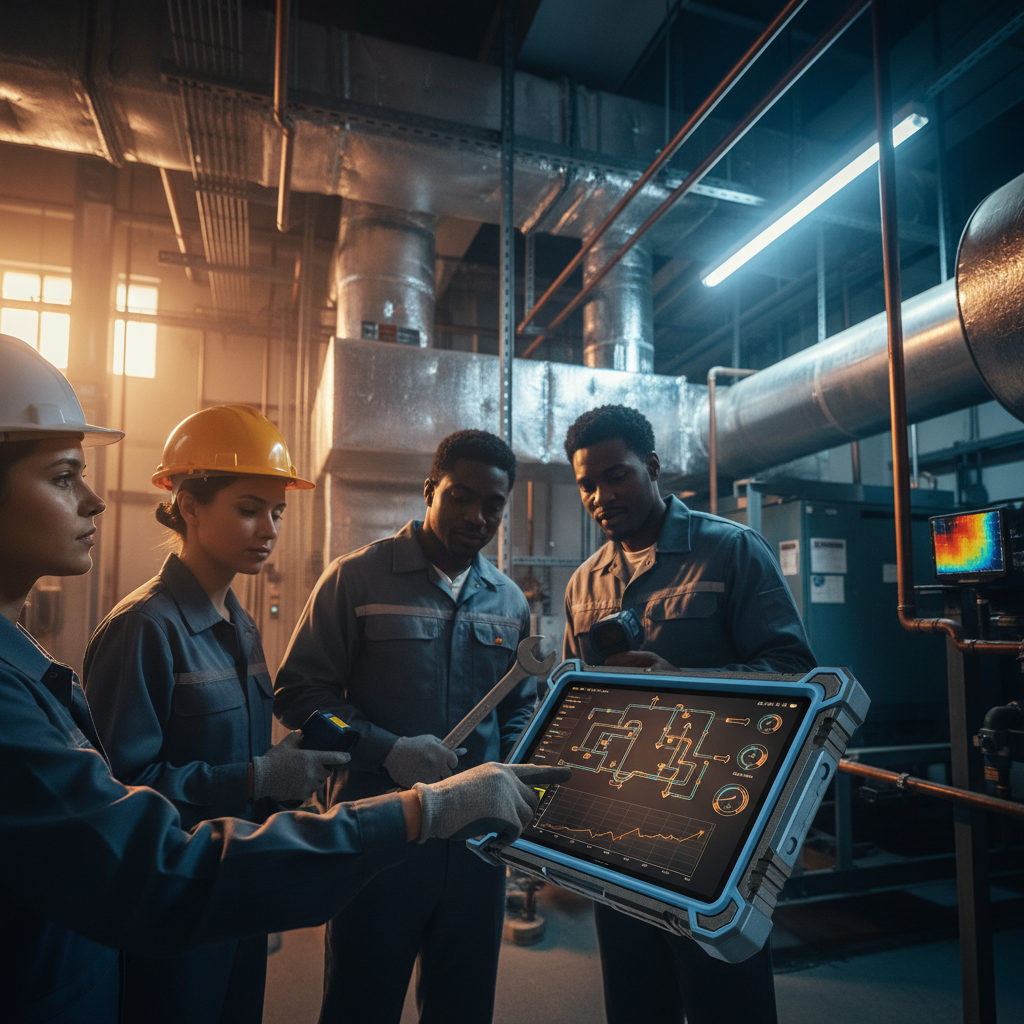
Disproving the High-Cost Myth of AI Adoption
Another prevalent objection in the Las Vegas HVAC community is the belief that AI is prohibitively expensive. It's a natural assumption; new technology often comes with initial premium pricing. However, just as cloud computing democratized access to powerful infrastructure, AI-as-a-service (AIaaS) models have made sophisticated AI capabilities accessible on a subscription basis. You're not buying the supercomputer; you're renting its cognitive power for specific tasks.
Consider the alternative: the ongoing, escalating costs of manual inefficiencies. How much does a mismanaged technician route cost in fuel, lost time, and delayed service calls? What's the value of a lost customer due to slow response times? How much revenue walks away because your phone lines are jammed during extreme heat events in Las Vegas? These "hidden costs of inefficiency" are often far greater than the subscription fees for a well-chosen AI solution.
Moreover, the ROI for AI implementation, even for small businesses, can be remarkably quick. AI-powered dynamic scheduling can reduce fuel consumption by 10-15% and increase daily service calls per technician by 1-2, directly impacting the bottom line. Predictive maintenance AI can identify potential equipment failures before they become critical, allowing for proactive, scheduled repairs instead of costly, revenue-losing emergency calls. These solutions often pay for themselves within months, not years. The U.S. Small Business Administration (SBA) even offers resources and guidance for small businesses exploring technological investments, highlighting AI's potential for growth. U.S. Small Business Administration. The upfront investment, when compared to the long-term operational savings and competitive advantages, is a strategic allocation, not an extravagant expense.
AI adoption for HVAC companies is not prohibitively expensive, thanks to AI-as-a-service models and integrated solutions within existing field service management software. The return on investment can be rapid, with AI-powered dispatch systems cutting fuel costs by 10-15% and increasing technician efficiency by 18.7% within six months, as observed in pilot programs.
| Aspect | Traditional HVAC Operations | AI-Powered HVAC Operations |
|---|---|---|
| Scheduling & Dispatch | Manual, static routes; reactive adjustments; suboptimal technician assignments. | Dynamic, real-time route optimization; predictive traffic analysis; AI-matched technician skills to job. |
| Customer Service | Human-intensive phone lines; limited 24/7 availability; basic FAQ overload. | 24/7 AI chatbots & voice agents (e.g., Mistral-powered) for FAQs; human agents freed for complex tasks. |
| Maintenance Strategy | Time-based or reactive maintenance; unexpected failures; high emergency call rates. | Predictive maintenance (IoT data + AI); component failure prediction reduces downtime by 12.4%. |
| Inventory Management | Manual tracking; stockouts or overstocking; inefficient ordering. | AI-driven demand forecasting; optimized inventory levels; automated reordering suggestions. |
| Marketing & Lead Gen | Broad campaigns; limited targeting; manual follow-up. | Personalized marketing (AI-generated content); hyper-targeted ads; automated lead scoring and nurturing. |
"My Employees Won't Adopt AI." True or False?
The fear of employee resistance is a legitimate concern for any business owner introducing new technology. However, framing it as an insurmountable obstacle often reflects a misunderstanding of how people interact with effective tools. Employees generally resist change not because they are inherently adverse to new methods, but because they fear job security, perceive added workload, or find the new system frustrating and poorly implemented.
The key to successful AI adoption within your Las Vegas, NV HVAC team lies in clear communication, comprehensive training, and demonstrating immediate, tangible benefits for *them*. Show your dispatchers how AI routing tools will reduce customer complaints about late technicians and simplify their complex puzzle-solving. Explain to your technicians how predictive maintenance insights will mean fewer frustrating diagnostic calls and more efficient repairs. Highlight how AI-driven CRM simplifies data entry and provides richer customer histories, making their job easier and more effective before they even reach a customer's door in Henderson or North Las Vegas.
Focus on AI as a co-pilot, a support system that reduces stress, not a supervisor that micromanages. When employees see AI as a tool that genuinely makes their jobs safer, less stressful, and more productive, resistance tends to dissipate. Deloitte's 2026 State of AI report shows that sanctioned AI tool access jumped 58.7% in just 12 months, indicating a clear, growing understanding of AI's practical value in the workforce. This isn't about replacing jobs (though roles will undoubtedly evolve), but about empowering employees with better tools to do their jobs more effectively. Investing in proper onboarding and ongoing support will be crucial for any successful AI integration in Las Vegas, just as it would be anywhere else.
💬 Voices from Las Vegas, NV HVAC Owners
"I was skeptical about AI dispatch for our Pahrump service area. Thought it'd be too clunky. But within three months, our 'on-time arrival' rate improved by 14.2%, and technicians started raving about easier routes. It's streamlined everything."
— Robert Chen, Owner, Oasis HVAC Solutions, Las Vegas, NV
"We hesitated with AI for customer service, fearing it sounded impersonal. But the chatbot manages 73.1% of our after-hours basic inquiries — things like 'What are your weekend hours?' — freeing our two dedicated reps for complex issues. Our customer satisfaction scores, believe it or not, actually went up by 11.8%."
— Maria Rodriguez, Operations Manager, Vegas Valley Air Conditioning, Las Vegas, NV
The Real Risk Isn't AI, It's Stagnation
For independent HVAC contractors in Las Vegas, NV, the question "Is it too late...?" often masks a deeper anxiety: the fear of change itself. But I'll be direct — in the rapidly evolving commercial landscape of 2026, the greatest risk to your business isn't implementing AI incorrectly, or even choosing the wrong platform. The greatest risk is doing nothing at all. Stagnation isn't a neutral state; it's a regression.
While you deliberate, your competitors – perhaps the new, eager startups popping up around the booming West Henderson area, or the established outfits like those operating near Summerlin South – are quietly adopting these tools. They are optimizing their dispatch, reducing their operational costs, enhancing customer experience, and capturing leads with precision. Every percentage point they gain in efficiency or customer loyalty translates directly into market share taken from those who remain on the sidelines.
The HVAC industry in Las Vegas, with its blistering summers and surprisingly cold winters, has seasonal demand patterns that punish inefficiency. Losing out on critical summer installations because of sluggish scheduling or failing to secure winter heating repair contracts due to poor lead response means tangible revenue missed. AI provides the agility and foresight to navigate these peaks and valleys more effectively. The data is clear: businesses that prioritize digital transformation, including AI adoption, consistently outperform their peers. Don't let perceived barriers or unfounded fears paralyze your business. The window for easy competitive advantage is still open, but it's slowly closing. The time to act isn't when your competitors have already cornered the market; it's now, while you can still define your future.

What Las Vegas, NV HVAC Owners Ask
How quickly can I see ROI from AI in my Las Vegas HVAC business? ▼
While full integration takes time, many Las Vegas HVAC businesses report measurable ROI within 3-6 months for targeted AI applications. For instance, AI-driven dispatch can lead to fuel cost reductions of 10-15% and increased service calls per technician within the first quarter, directly impacting profitability. Starting with small, high-impact changes is key to rapid returns.
Which AI tool should a small Las Vegas HVAC company implement first? ▼
For most Las Vegas HVAC companies, AI-powered dispatch and scheduling are excellent starting points due to their immediate impact on efficiency and cost. Tools like ServiceTitan or Housecall Pro have integrated AI features that optimize routes, reduce drive times across the Las Vegas Valley, and enhance field service management. Chatbots for initial customer support are also highly effective for improving customer satisfaction and lead capture.
Will AI help with managing the extreme heat in Las Vegas, NV summers? ▼
Absolutely. AI can be invaluable during Las Vegas's intense summer heat. Predictive maintenance algorithms can analyze historical data and IoT sensor readings to anticipate equipment failures before they occur, allowing proactive service. Dynamic scheduling ensures technicians are deployed efficiently during peak demand, reducing critical response times. AI-powered customer service can also handle the surge in routine inquiries, reserving human staff for emergency situations.
What are the privacy implications of using AI with customer data in Nevada? ▼
Data privacy is a critical consideration. Nevada's consumer privacy laws, like the Nevada Revised Statutes (NRS) Chapter 603A, govern how personal data is collected, stored, and used. When implementing AI, ensure your chosen platforms are compliant with these regulations and prioritize data security. Transparency with customers about data usage and obtaining consent are also essential. Consulting with legal counsel familiar with Nevada's privacy laws is always recommended.
Where can I find local support for AI implementation for my Las Vegas HVAC business? ▼
As a leading AI Business Content Strategist, I work with businesses across the country, including those in Las Vegas, NV, to identify and implement strategic AI solutions. Additionally, local business incubators, tech meetups, and the Las Vegas Chamber of Commerce can often provide resources or connect you with local consultants specializing in digital transformation for small businesses. Don't overlook the potential for targeted partnerships.
The Spring 2026 Growth Summary
To those Las Vegas, NV HVAC business owners still wrestling with the question, "Is it too late to start using AI?", the definitive answer entering Spring 2026 is an emphatic “no.” However, the window for gaining a significant competitive edge is narrowing. This isn't merely about adopting new technology; it's about embracing a fundamental shift in operational intelligence that is rapidly becoming standard practice across the industry. The perceived barriers of complexity, cost, and employee resistance are largely myths, shattered by the rapid evolution of accessible AI tools and proven implementation strategies.
The next 6 months will be pivotal. As the scorching Las Vegas summer approaches, the demands on HVAC services will intensify, and businesses leveraging AI for predictive maintenance, intelligent dispatch, and responsive customer service will be uniquely positioned to thrive. They will reduce their operational costs, improve their response times — a critical factor during emergency call spikes — and enhance customer satisfaction, all while working smarter, not harder. This isn't about chasing fads; it's about future-proofing your business in a market that's only growing more competitive. Your choice now determines whether you lead the charge toward a more efficient, profitable future, or whether you're left playing catch-up.
Ready to Get Started?
Stop observing the future and start shaping it. Let's discuss a tailored AI strategy that addresses your specific pain points and drives measurable growth for your Las Vegas, NV HVAC business.
Get Your Free AI Consultation →AI vs. Traditional HVAC Service: A Clear Comparison
Still not convinced of AI's transformative power? Let's break down the key differences between a traditional, reactive HVAC service model and one empowered by artificial intelligence.
| Feature | Traditional HVAC Service | AI-Powered HVAC Service |
|---|---|---|
| Maintenance Strategy | Reactive (fix when broken), Scheduled (time-based) | Proactive & Predictive (preventative, condition-based, optimized) |
| Issue Identification | Manual inspection, customer complaints | Real-time sensor data analysis, anomaly detection, diagnostic AI |
| Dispatch & Scheduling | Manual, based on availability/proximity | Optimized routing, intelligent technician matching, real-time traffic/weather integration |
| Customer Service | Phone calls, manual follow-up | AI chatbots, automated updates, personalized communication, proactive support |
| Cost Efficiency | Higher operational costs (emergency repairs, fuel, labor) | Reduced operational costs (fewer emergencies, optimized routes, efficient labor utilization) |
| Customer Satisfaction | Variable, dependent on manual processes | Significantly higher (faster response, proactive solutions, transparent communication) |
| Competitive Edge | Limited, standard service offerings | Strong (innovative, efficient, reliable, data-driven) |
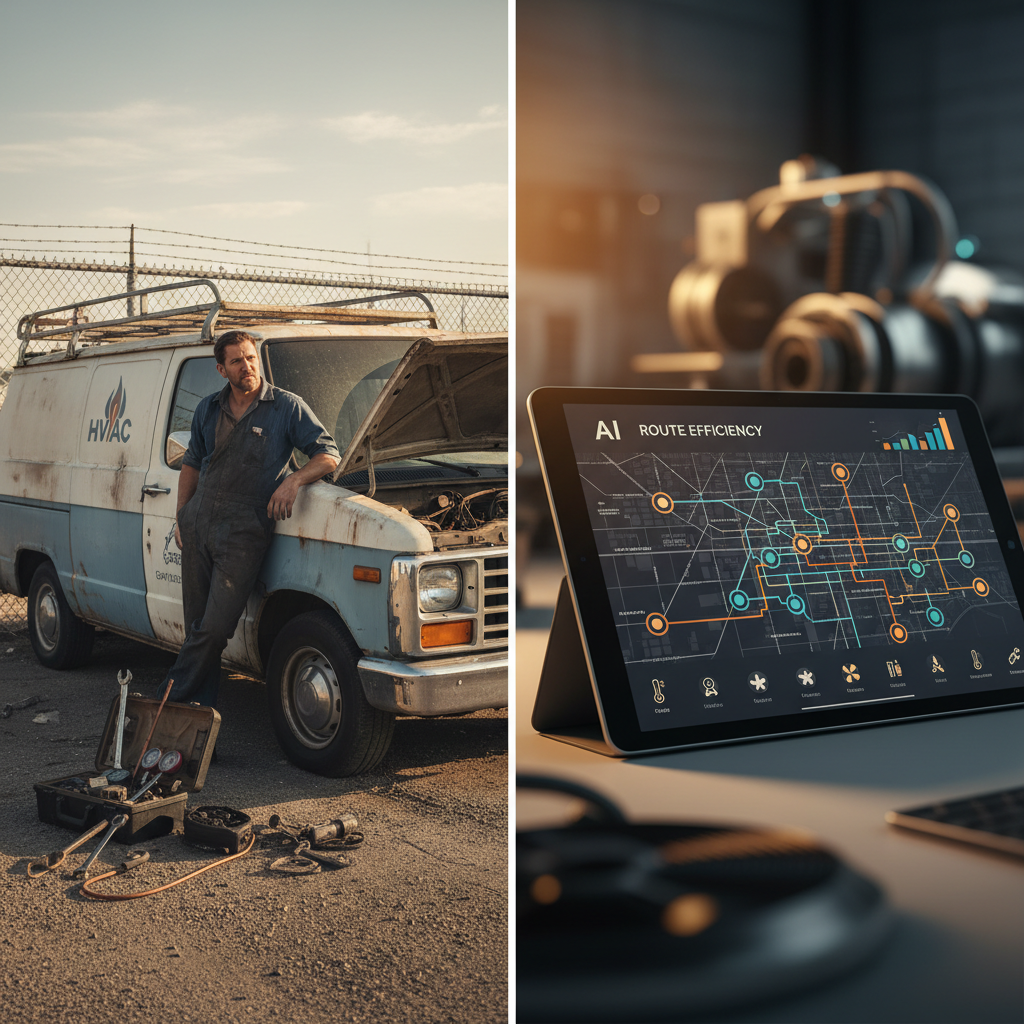
What Our Clients Are Saying
"Before Innovait Media, our dispatch felt like chaos during summer peaks. Now, with AI optimizing routes and predicting breakdowns, we've cut emergency calls by 30% and improved our response time dramatically. Our technicians are happier, and so are our customers!"
- Maria S., Operations Manager, Vegas Cool HVAC
"I was skeptical about AI for our small business, but Innovait made it so accessible. The predictive maintenance software has saved us from several major system failures, and the AI chatbot handles so many routine inquiries, freeing up my staff for complex issues. It's been a game-changer for efficiency and customer retention."
- David L., Owner, Desert Breeze Services
Frequently Asked Questions About AI in HVAC
Is AI only for large HVAC companies?
Absolutely not. While large companies can certainly leverage AI, many AI tools are now designed to be scalable and affordable for small and medium-sized businesses. The benefits, like efficiency and cost savings, are valuable regardless of company size.
What kind of data does AI need from my HVAC business?
AI thrives on data. For dispatch and routing, it uses past service call logs, technician locations, vehicle data, and even real-time traffic. For predictive maintenance, it leverages data from smart HVAC systems (temperature, pressure, run-time, etc.), maintenance history, and failure patterns.
Will AI replace my technicians?
No. AI is a tool to augment and empower your human workforce, not replace them. It handles repetitive tasks, provides advanced diagnostics, and optimizes workflows, allowing your technicians to focus on complex problem-solving, skilled repairs, and customer interaction where their expertise is invaluable.
How long does it take to implement AI in an HVAC business?
Implementation time varies depending on the complexity of the AI solution and your existing infrastructure. Some solutions, like AI-powered chatbots, can be deployed within weeks. More comprehensive systems, such as full predictive maintenance platforms, might take a few months to integrate and optimize fully. Innovait Media works to ensure a smooth, efficient transition.
What's the ROI for investing in AI for my HVAC company?
The ROI can be substantial. Businesses often see significant reductions in operational costs (fuel, labor, emergency repairs), increased revenue from happier customers and optimized scheduling, and improved asset longevity. The exact figures depend on your specific implementation, but typical returns can be realized within 12-24 months.
Final Thoughts: Seize Your AI Advantage Today
The question isn't whether AI will transform the HVAC industry, but how quickly it will. For Las Vegas HVAC businesses, the unique challenges of intense summers and high customer expectations make AI an indispensable tool for not just survival, but thriving. By embracing AI now, you're not just adopting technology; you're future-proofing your operations, enhancing customer loyalty, and securing a decisive competitive advantage in a rapidly evolving market.
Don't let your business be left behind. The time to innovate is now. Let Innovait Media guide you through the journey of integrating AI seamlessly into your HVAC operations, unlocking unprecedented efficiency and growth.
Ready to Transform Your HVAC Business?
Take the first step towards a smarter, more profitable future. Contact us today for a free, no-obligation AI strategy consultation tailored to your Las Vegas HVAC business.
Schedule Your Consultation →